The Difference Between Nerve Pain and Muscle Pain
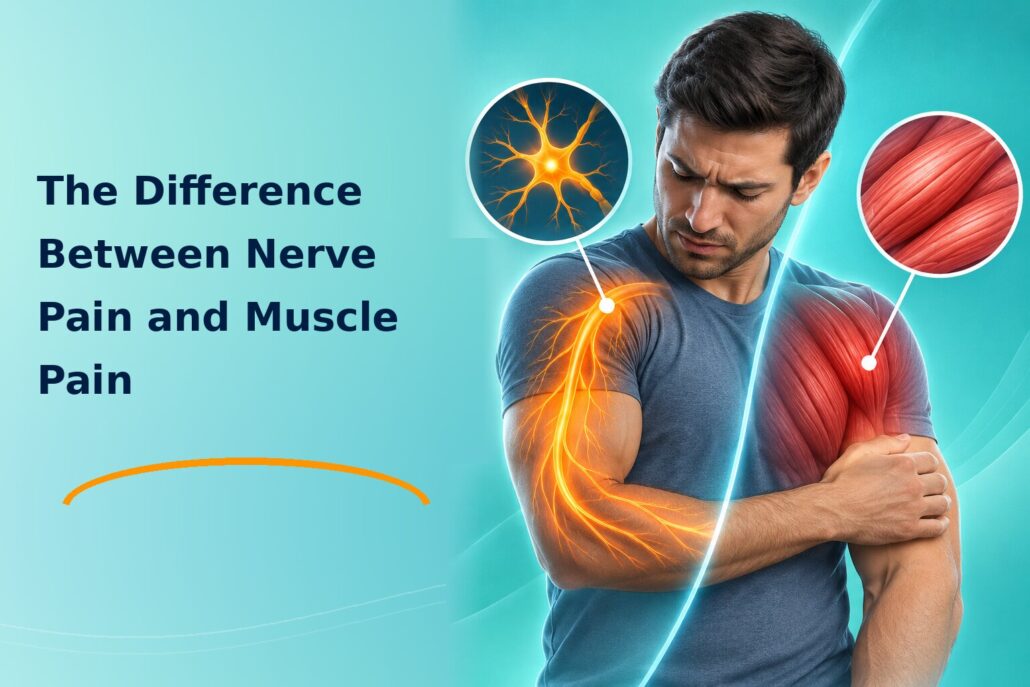
While the word “pain” is enough to convey a sensation we all understand as humans, it can be a bit too generic to a pain doctor. In reality, pain can work in several different ways, and it manifests in a multitude of experiences. This is apparent when taking a closer look at nerve pain, muscle pain, and what sets them apart from each other.
If you are curious about the nature or source of your pain, this article will help you recognize whether your pain is arising from your body’s muscles or from damage affecting your nerves. Continue reading to learn the different underlying mechanisms behind these two classifications of pain.
What Is Nerve Pain?
By modern definition, nerve pain or neuropathic pain results from a lesion or disease affecting the somatosensory system (the system concerned with the perception of external stimuli, internal stimuli, and the sense of where the body is in space). In other words, this type of pain can occur when a nerve in the body is injured, compressed, or affected by a disease.
Nerve pain is common overall, and more common amongst older people. It is estimated that 6.9-10% of the general population experiences pain with neuropathic characteristics. These characteristics include burning, shooting, stabbing, or electric shock–like pain often accompanied by pins and needles. Some people also experience numbness or allodynia (feeling pain from something that is not normally painful).
One especially frustrating feature of neuropathic pain is that it can appear without any obvious cause. Still, major causes of neuropathic pain include diabetes, shingles, spinal cord injury, strokes, multiple sclerosis, cancer, traumatic or postsurgical nerve injuries, as well as pain associated with nerve-root problems such as sciatica.
What Is Considered Muscle Pain?
Pain that occurs when a muscle is affected by an injury, loss of blood flow, infection, or a tumor is generally considered as muscle pain.
Muscle pain may be described as sharp, dull, or aching depending on what caused the damage. The most common of these causes are injuries like paper cuts and broken bones, infections, overuse, tumors, and other conditions affecting the muscles like polymyalgia rheumatica.
It is important to note that pain felt in a muscle does not necessarily mean that the muscle itself is the source, as that pain can actually be caused by a disorder in another organ. For instance, back pain may be caused by a kidney stone, abdominal aortic aneurysm, inflammation of the pancreas, or pelvic disorders.
Nerve Pain vs. Muscle Pain
Now that both muscle pain and nerve pain have been described, time has come to focus on what sets these two classifications of pain apart. It should be emphasized that the descriptions specified previously are more like general patterns than rigid differentiators. As nerve pain and muscle pain can share characteristics sometimes.
First, nerve pain is more associated with burning, tingling, numb, or electric shock-like sensations. Not to mention, this pain can come with increased sensitivity to normally harmless touch or temperature. On the other hand, muscle pain is more likely felt through sharp, dull, or aching sensations.
Moreover, neuropathic pain might radiate and follow the distribution area of a nerve, while muscle pain is more likely to be localized to the affected area. Nociceptive pain is also often related to clear causes, injuries, or musculoskeletal conditions, while neuropathic pain can occur without a clear cause.
Can Someone Suffer from Both Nerve and Muscle Pain?
It is not abnormal to observe pain with both nociceptive and neuropathic components in the same person. For example, chronic low back pain can be classified as a mixed pain syndrome because it arises from both an inflammatory response to tissue injury and the lumbar spine and/or nerve roots being affected.
This is why identifying the underlying pain mechanism is more useful than trying to diagnose the case based only on whether the pain feels more like muscle pain or nerve pain. If you want your pain to be professionally identified, you can depend on pain clinics to do the job.
Get the Right Assessment for Your Pain
If your pain is persistent, severe, worsening, or unexplained, you should consider seeking medical assessment. Whether you are feeling persistent nerve pain symptoms or disabling muscle pain symptoms, accurate diagnosis is vital to get the most effective pain treatment.
At Dr. Samer Abdel-Aziz’s pain clinic, we assess chronic pain and all its types in order to develop treatment plans personalized to each patient’s individual condition, history, and needs. Book an appointment with our clinic today to have your pain evaluated and treated as soon as possible.
🗓️ Book your first appointment here: https://samerpainclinic.com/contact-us/
🗓️ Call us at +962790922204 or contact us via WhatsApp: https://wa.me/962790922204
Feel free to email your questions or concerns to info@samerpainclinic.com
Sources:
https://journals.lww.com/pain/citation/2011/10000/a_new_definition_of_neuropathic_pain.8.aspx
https://opentext.uoregon.edu/neurobiology/chapter/somatosensory-systems/
https://www.sciencedirect.com/science/article/abs/pii/S0304395913006106
https://www.iasp-pain.org/resources/fact-sheets/what-is-neuropathic-pain-a-guide-for-patients
https://www.sciencedirect.com/science/article/abs/pii/S0304395907004496
https://www.ninds.nih.gov/health-information/disorders/pain
https://my.clevelandclinic.org/health/symptoms/nociceptive-pain
