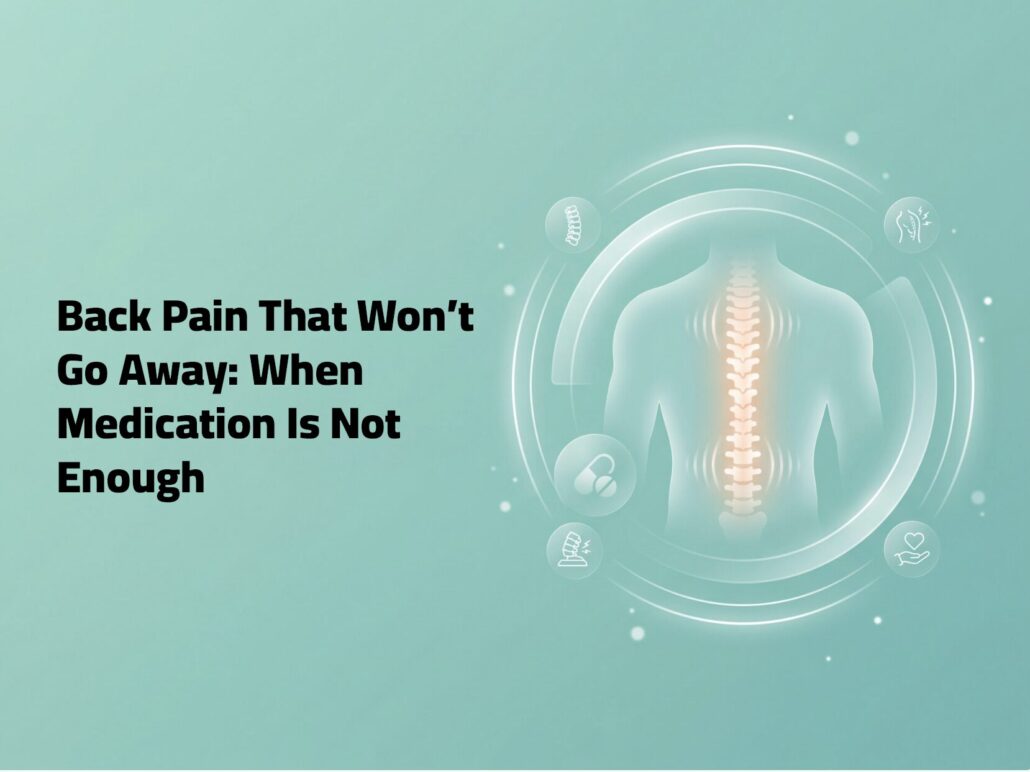
Back Pain That Won’t Go Away: When Medication Is Not Enough
Back pain is one of the most common health complaints worldwide, and it is nothing to take lightly. In 2020, low back pain affected 619 million people globally, and it is estimated that this number will rise to 843 million people by 2050.
Even if you are not suffering from back pain now, there is a significant chance you would encounter it in the future; as most people experience low back pain at least once in their life. It sometimes lasts for a short while and fades away with over-the-counter medications, but it can also become chronic and disable people from living their day-to-day lives.
If you are one of the hundreds of millions suffering from back pain, you might have already tried taking painkillers, but that might not be enough to find long-lasting relief. When medications fail to keep the chronic back pain at bay, it’s time to understand why it is not enough and what other options are there.
Why Some Back Pain Just Doesn’t Respond to Medications
Chronic pain relief may be limited if treated by medications alone. It is true that medications such as non-steroidal anti-inflammatory drugs (NSAIDs), opioids, and muscle relaxants can help relieve inflammation and discomfort initially, but they often provide only temporary relief when your back pain is persistent.
The reason for that is simple; most pain medications do not address the underlying causes of chronic back pain; they just relieve its sensation. Plus, they are linked with numerous long-term side effects and risks that outweigh their short-term relief. Patients must use extra caution if they take opioids especially, given the significant public health issues arising from opioid dependence and abuse.
That is why, for chronic low back pain, the focus of management should be on non-pharmacological treatments on top of pharmacological ones to improve function and address the broader effects of back pain.
Non-Surgical Back Pain Solutions to Consider
Because medications alone are often inadequate, current clinical guides strongly suggest using multicomponent care for back pain, especially chronic low back pain, that addresses both the physical and functional aspects of the condition. Common solutions include:
1. Exercise and Rehabilitation
According to the World Health Organization (WHO), lower back pain is the single leading cause of disability worldwide and the condition for which the greatest number of people may benefit from rehabilitation.
Specific exercise programs tailored by physical therapists help strengthen core muscles, improve posture, and enhance spinal stability. These programs can include spinal manipulative therapy, which is a safe intervention that requires physicians to administer a quick thrust to the patient’s back while lying in a specific position. It is more effective for acute, short-tern low back pain.
All of these physical therapy strategies are important to reduce back pain over the long term, and resume usual physical activity.
2. Sacroiliac Joint Steroid Injections
Sacroiliac Joint injections have been widely used for the treatment of low back pain originating from the sacroiliac joint for a long time. During this minimally invasive procedure, anti-inflammatory medicine (a steroid) is injected into the joint space. This medicine serves to treat the pain caused by irritation and inflammation of the joint.
3. Radiofrequency Ablation
Radiofrequency ablation is widely used to treat chronic back pain. It is proven to significantly alleviate low back pain originating from the facet joints and improve physical function. This treatment sends radio waves through precisely placed needles to the nerves of the facet joints, thus destroying nerve tissue and preventing pain signals from reaching the brain.
4. Psychological and Social Support
Chronic pain is not purely physical; it is often accompanied by depression, stress, and anxiety which can amplify pain perception. Techniques that address the mental and social effects of pain like cognitive behavioral therapy (CBT) help patients with their disability, fear avoidance, and self-confidence.
5. Lifestyle Adjustments
It goes without question that some daily habits can cause you pain, and for those suffering from chronic back pain, following a healthier lifestyle can go a long way. Committing to good posture, managing weight, moving constantly, and improving sleep quality are big steps towards reducing the impact of chronic back pain on personal life.
Move Beyond Pills Towards Lasting Relief
If your back pain just won’t go away with medications, and is starting to hinder your daily life, it means your back pain has become more complex than a passing injury. Chronic back pain has many facets, and Dr. Samer Abdel-Aziz’s pain clinic in Amman has the means to address them all.
Whether you want a detailed diagnosis, interventional procedure, or comprehensive treatment plan for your back pain, depend on our expertise with chronic back pain treatment and management. Book an appointment today and we will guide you back to the life you love.
🗓️ Book your first appointment here: Contact us
🗓️ Call us at +962790922204 or contact us via WhatsApp
Feel free to email your questions or concerns to info@samerpainclinic.com
Sources:
https://pubmed.ncbi.nlm.nih.gov/37273833/
https://pubmed.ncbi.nlm.nih.gov/20680369/
https://www.bmj.com/content/385/bmj-2024-080064
https://pmc.ncbi.nlm.nih.gov/articles/PMC12113191
https://www.who.int/news-room/fact-sheets/detail/low-back-pain
https://pmc.ncbi.nlm.nih.gov/articles/PMC3537457/