Why Is Back Pain So Common and How to Prevent It?
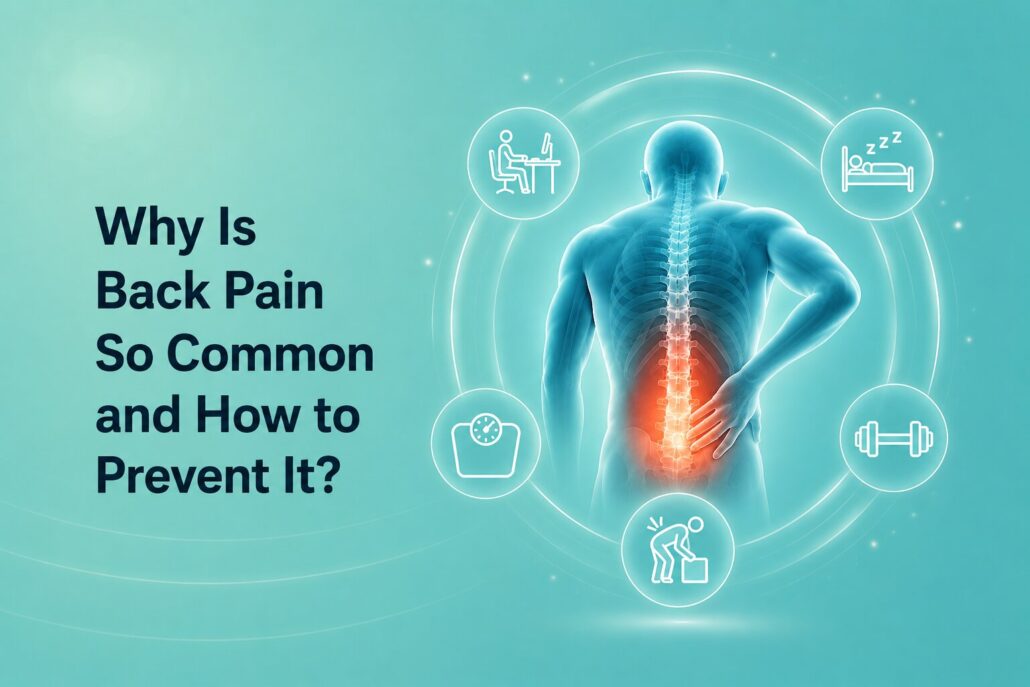
Back pain is one of the most common health conditions in the world, and it is now the leading cause of disability worldwide. Contrary to popular belief, low back pain affects people of all ages and communities of every income level; not only older people.
It was estimated that 619 million people were affected by back pain globally in 2020, and that number is predicted to increase to 843 million by 2050. This makes back pain a major public health concern. Therefore, understanding back pain causes can help you prevent it and recognize when it needs medical care.
Why Is Back Pain So Common?
As mentioned previously, hundreds of millions have experienced prolonged back pain, but what makes it so prevalent? It comes down to the back being particularly susceptible to strain and injury.
The human back is a complex structure made up of bones, joints, discs, muscles, ligaments, and nerves that work together to support our daily movement and stability; from sitting and walking to lifting and bending. All these different parts are prone to getting injured or affected by daily activity, diseases, or accidents.
Research shows that most cases of low back pain do not have a single identifiable cause such as a vertebral fracture, malignancy, infection, or serious disease. Only a small proportion of people have a well understood pathological cause for their back pain.
While some people can be at a high risk of developing back pain, like people with physically demanding jobs, there are some factors that can jointly contribute to the symptoms of back pain. Different physical, lifestyle, occupational, and psychological factors can cause back pain, including:
- Poor posture and prolonged sitting.
- Repetitive harmful movements.
- Muscle weakness.
- Constant heavy lifting.
- Excess body weight.
- Previous injuries.
- Age-related changes in the spine.
- Stress and other psychosocial factors.
How to Prevent Back Pain
Prevention Starts with Movement
One of the most effective lower back pain relief tips is also one of the simplest: stay active. Of course, some harmful movements can contribute to back pain, but the World Health Organization (WHO) recommends regular physical activity to both prevent and manage low back pain. Moving regularly helps:
- Strengthen muscles that support the spine.
- Improve flexibility and mobility.
- Enhance balance and coordination.
- Reduce the risk of recurrent episodes of back pain.
Walking, swimming, targeted stretching exercises, and strength training are easy options for maintaining your activity while supporting your spinal health and preventing future back pain.
Posture Plays a Part
Nowadays, many adults spend the majority of their days hunched over a desk, a steering wheel, or an electronic device. While posture is not the sole cause of back pain, it is true that awkward or unnatural postures can increase strain on muscles and joints, causing additional muscle fatigue and disrupting blood flow in the back.
To avoid the risk of developing back pain, implement the following simple habit adjustments:
- Try not to slouch when standing and sitting.
- Sit up straight with your back supported.
- Keep screens at eye level.
- Avoid remaining in one position for long periods.
- Learn proper ergonomic principles to work and handle tools comfortably.
Aim for a Healthy Weight
Excess body weight and obesity are heavily associated with acute and chronic low back pain. Thus, getting to and staying at a healthy weight lowers your risk of back pain. There are plenty of methods to reach and maintain a healthy body weight, with the most important being exercise.
Even modest increases in physical activity can provide meaningful benefits over time that go beyond reducing weight alone. Following a healthy diet can also help with weight control. Not to mention that getting enough calcium and vitamin D can help strengthen the bones in your spine, reducing risk of back pain.
When to Seek Professional Help?
Many episodes of back pain improve within few weeks; however, if your pain persists or worsens, you might be dealing with chronic low back pain. You should seek medical attention for chronic back pain if:
- Your pain persists or worsens for more than 3 months.
- Your pain begins interfering with your daily activities and sleep.
- Your back pain radiates into the legs.
- You experience numbness or weakness in your limbs.
Finding Effective Back Pain Treatment in Amman, Jordan
If back pain is limiting your ability to work, exercise, or enjoy daily life, professional care may help you find lasting relief. At Dr. Samer Abdel-Aziz’s pain clinic, we provide comprehensive back pain treatment in Amman, including detailed evaluations, personalized treatment plans, and advanced minimally invasive pain management options when appropriate.
Contact our clinic today whether you are looking for answers about back pain causes and prevention or searching for effective lower back pain relief tips. Our experienced team is here to help guide you towards better spinal health and quality of life.
- 🗓️ Book your first appointment here: Contact us
- 🗓️ Call us at +962790922204 or contact us via WhatsApp
Feel free to email your questions or concerns to info@samerpainclinic.com
Sources:
https://pubmed.ncbi.nlm.nih.gov/29573870/
https://pubmed.ncbi.nlm.nih.gov/37273833/
https://www.who.int/news-room/fact-sheets/detail/low-back-pain
https://pubmed.ncbi.nlm.nih.gov/28192789/
https://www.cdc.gov/niosh/ergonomics/ergo-programs/risk-factors.html

