Effective Migraine Treatments: How to Manage Headaches and Prevent Episodes
Any person who suffers from migraines would tell you that they are more than just bad headaches that come and go peacefully; they are chronic conditions that can cause prolonged disability. Migraines affect more than 1 billion people worldwide, and about 16% of all disability caused by neurological conditions globally was due to migraines.
Migraines impact people’s economic situation, family relationships, as well as work and school activities. They can also be resistant to treatments, which is why living with them is hard on many. Fortunately, there are evidence-based strategies you can use to reduce migraine pain, lessen episode frequency, and improve mental health.
Of course, it is better to apply these strategies while consulting a medical professional.
Understanding Migraines
A migraine is an episodic, throbbing headache (usually but not necessarily on one side of the head) often accompanied by other symptoms such as nausea, vomiting, and sensitivity to light, sound, or movement. Migraines vary from one person to another, ranging from moderate to severe episodes lasting usually from 3 to 72 hours and occurring in varying frequencies. When these head pain episodes occur in 15 days or more per month, it’s classified as chronic migraine; that is when prevention strategies become necessary supported by consultation from a specialist.
A warning symptom known as an aura occurs before or with a migraine in about 25% of people. An aura can include visual changes, such as flashes of light or blind spots, tingling in one side of the face, and trouble speaking.
The causes and mechanisms of migraines are highly debated and not fully clear; however, studies have linked them to genetics, environmental factors, brain chemical imbalances, dysregulations in the brain network, and nerve hypersensitivity.
Most Effective Migraine Treatments
Your choices for migraine treatment depend on how often you have headaches and how painful they are. Your treatment also takes into consideration whether you have nausea and vomiting, whether your headaches are disabling, and whether you have other medical conditions.
Dealing with migraines is a big priority to those suffering from them, that is mostly due to their debilitating effects and their unpredictable nature. Many patients were seen to benefit from the following treatments:
Pain-relieving and Preventative Medicine
Many medicines have been designed to treat migraines, some of them are meant to relieve its symptoms while others aim to prevent its episodes before they happen. At the first sign of an episode for example, patients can start with nonsteroidal anti-inflammatory drugs (NSAIDs) like ibuprofen to relieve mild to moderate migraine pain.
Drugs such as triptans block migraine pain pathways in the brain; thus, they are more effective than basic painkillers for moderate to severe attacks. Newer generations of medications that target migraines specifically include gepants and ditans, and they act on the nervous system to counter the chemical imbalances related to migraine pain.
As for patients with more frequent and painful migraines, blood pressure-lowering medicines, antidepressants, antiseizure drugs, and CGRP monoclonal antibodies are recommended. These preventives reduce attack frequency, shorten its duration, and can improve response to other treatments.
Neuromodulation
Another emerging preventive migraine treatment is non-invasive neuromodulation, which is a collection of devices that alter nerve activity through targeted delivery of a stimulus, such as electrical stimulation, either to stop a migraine attack when it begins or to reduce how often attacks occur.
Nerve Blocks
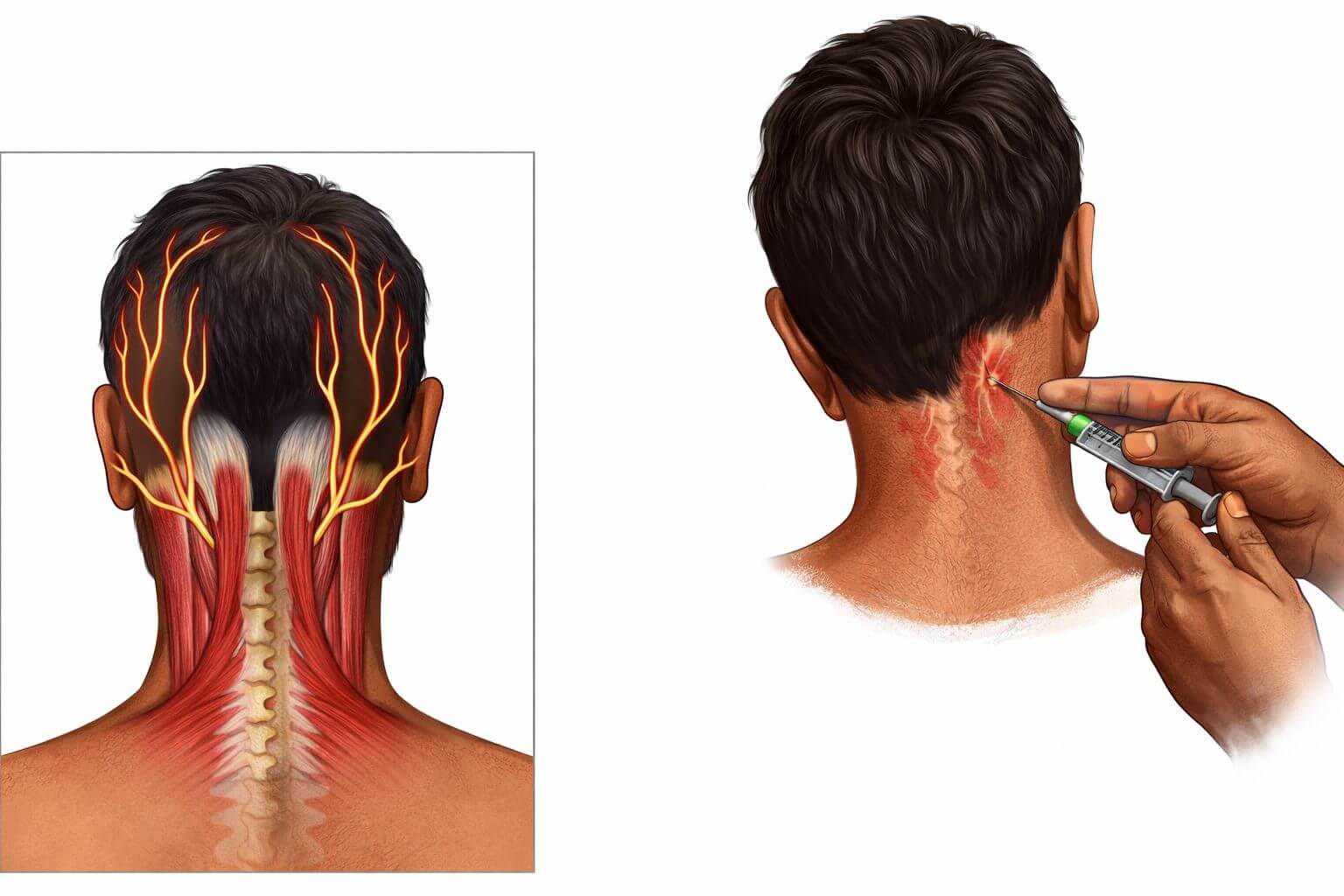
Patients with headaches may choose using nerve blocks based on their personal preference or when medicines prove ineffective or unadvised. Nerve blocks are a minimally invasive procedures that require the injection of local anesthetic around nerves involved in migraine pain (such as the greater occipital nerve at the back of the head) to temporarily interrupt the pain signals those nerves send to the brain.
Studies have shown that nerve blocks significantly reduce headache frequency and pain for those with frequent migraines. They are also shown to decrease the patients’ need to use painkillers.
Botox Injections

For chronic headache sufferers, Botox injections administered every 12 weeks have been shown to significantly reduce the number of headache days per month and decrease migraine-related disability. It is considered a low-cost treatment of various kinds of migraines including chronic, episodic, unilateral, and vestibular types of migraines.
Lifestyle Adjustments and Behavioral Therapy
While medications are the backbone of migraine therapy, lifestyle changes and natural remedies can support overall relief and prevention. Patients can take a huge step towards relief by identifying and avoiding their personal triggers; such as stress, sleep disruption, dehydration, or consuming certain foods.
Take Control of Your Migraines Today
Migraines that don’t respond to first-line head pain treatments or that significantly impair daily life may need more advanced treatment. Seeking evaluation by a specialist will guide you toward tailored treatment plans using newer therapies or combination approaches.
Don’t let migraines control your life. At Dr. Samer Abdel-Aziz’s clinic, we specialize in comprehensive approaches to reduce headache frequency, relieve headache, and improve your quality of life with individualized care plans.
Book an appointment with our pain specialists today to start your personalized treatment journey toward lasting migraine relief.
🗓️ Book your first appointment here: Contact us
🗓️ Call us at +962790922204 or contact us via WhatsApp
Feel free to email your questions or concerns to info@samerpainclinic.com
Sources:
https://pmc.ncbi.nlm.nih.gov/articles/PMC8904749
https://www.msdmanuals.com/professional/neurologic-disorders/headache/migraine
https://pmc.ncbi.nlm.nih.gov/articles/PMC3391624/
https://www.sciencedirect.com/science/chapter/handbook/abs/pii/B9780128233573000045
https://pubmed.ncbi.nlm.nih.gov/41287059/
https://journals.sagepub.com/doi/10.1177/03331024251388377

