A Patient’s Guide to Finding Relief from Chronic Post-Surgical & Chronic Back Pain

Introduction
Living with chronic pain after surgery or ongoing back pain can feel overwhelming. You may have tried painkillers, physiotherapy, or even surgery, yet the discomfort persists. In fact, studies show that up to 20–30% of patients continue to experience pain after common surgeries, especially knee and spinal procedures.
You don’t have to live this way. Modern, non-surgical treatments are available that target the root cause of pain, offering relief for conditions such as chronic spine pain and providing effective spine pain relief in Amman. These approaches are particularly helpful for post-surgery pain management, helping patients regain mobility and improve quality of life.
For a deeper understanding of how pain management works, check out our article on “What Is Pain Management and How Is It Different from Traditional Treatment”
Section 1
Understanding Modern Pain Management
Pain management uses different methods and treatments to find & treat the root cause of pain. Its goal is to relieve pain and improve the quality of life for people with chronic pain. While pain medicine is part of pain management, other non-drug approaches are also used to help reduce pain. Pain management can include different methods like physical therapy, heat treatment, or acupuncture. Other types of pain management include cold therapy, transcutaneous electrical nerve stimulation (TENS), exercise, medications and non-invasive interventional procedures. These methods can be combined or used separately depending on the type and severity of pain, as well as the patient’s individual needs and preferences.
FAQ on Pain Management
Q: What is modern pain management, and how is it different from just taking painkillers or having surgery?
A: Modern pain management focuses on finding and treating the root cause of pain, not just masking symptoms. It’s a holistic approach that may include physical therapy, heat or cold therapy, acupuncture, TENS, and non-invasive procedures. Medications can be part of the plan, but the goal is long-term relief and improved quality of life, rather than temporary fixes..
Q: How does modern pain management help?
A: By combining accurate diagnosis, multidisciplinary care, non-drug treatments, and patient education, modern pain management empowers patients to actively manage pain and achieve lasting relief instead of just “getting through the day.”
Section 2
Understanding Chronic Post-Surgical Pain
What is Chronic Post-Surgical Pain?
Chronic post-surgical pain (CPSP) is pain that starts after surgery and lasts for at least 2–3 months. Before diagnosing CPSP, doctors rule out other causes such as infections or cancer coming back.
It affects about 2–10% of adults after surgery, but the risk can be much higher for certain operations like amputations, chest surgery, or breast removal. CPSP often involves nerve pain, which can happen when nerves are damaged during surgery or when the nervous system stays overly sensitive.
You’re more likely to develop CPSP if you had very strong pain right after surgery, already had pain before surgery, had certain types of surgical techniques, a long operation, or if you have certain psychological or genetic risk factors. CPSP can seriously impact daily life, limiting movement and affecting emotional wellbeing.
- You might be a candidate for chronic post-surgical pain management if:
- Your pain began or got worse after surgery.
- It has lasted more than 3 months beyond the expected healing period.
- The discomfort is at the surgery site or spreads to nearby areas.
- The pain feels nerve-related — such as tingling, burning, or shooting sensations.
- You notice pain that’s unusually intense (hyperalgesia) or triggered by normally non-painful actions (allodynia).
If your doctor has already ruled out other causes (such as infection or cancer recurrence), your symptoms could point to persistent post-surgical pain (PPSP).
This condition is more common than many realize:
- Up to 57% of patients after mastectomy
- Around 40% after spinal surgery
- Up to 44% after knee replacement
- Up to 27% after hip replacement
Common Misconceptions:
- “Pain after surgery is always temporary.”
Many people expect pain to disappear within weeks. While acute pain is normal, 20–40% of patients continue to experience chronic pain after surgeries like knee or spine procedures. - “If the surgery was successful, there shouldn’t be pain.”
Even technically successful procedures can result in chronic post-surgical pain (CPSP). For example, about 20% of knee replacement patients and up to 40% of spine surgery patients experience ongoing discomfort. - “Painkillers alone are enough.”
Medications may relieve symptoms temporarily, but modern pain management targets the root cause, combining therapies such as physiotherapy, nerve blocks, or spinal cord stimulation. - “Chronic pain is just in your head.”
CPSP often involves nerve injury, inflammation, or central nervous system sensitization. It’s a real, measurable condition that requires proper assessment and treatment. - “Revision surgery is always the solution for spine pain.”
Revision surgery is rarely the first or best option. Multidisciplinary approaches, lifestyle changes, and advanced therapies are usually preferred before considering additional surgery.
Key Terms You Should Know As a Patient
- Neuropathic Pain: Pain caused by nerve irritation or injury, often sharp, burning, or tingling.
- Spinal Cord Stimulation (SCS): A device implanted near the spine that interrupts pain signals before they reach the brain.
- Radiofrequency Ablation (RFA): A minimally invasive procedure that “turns off” small nerves transmitting pain.
- Epidural Steroid Injection: Injection of steroid medication near spinal nerves to reduce pain.
Why Awareness Matters for You: Understanding your pain and the treatments available is the first step toward relief.
Section 3
A Root-Cause Approach to Pain Management
Instead of masking pain with medication, treat the source. Through Interventional Procedures.
What Are Interventional Procedures?
An interventional procedure is a minimally invasive procedure that uses needles directed under imaging guidance to treat conditions inside the body—without large incisions or major disruption.
Because these procedures are less invasive than traditional surgery, they come with clear benefits:
- Less pain
- Faster recovery
- Little to no scarring
- Lower risk compared to open surgery
- Target the nerves, joints, or tissues causing pain
- Improve mobility and overall function
- Reduce reliance on painkillers
- Enhance quality of life
When Should You Start Considering “Interventional Procedures”?
The main goal of interventional procedures is to diagnose or treat a condition without the need for extensive surgery. These procedures aim to ease pain and provide long-lasting relief—especially for chronic pain.
Interventional procedures can serve as both diagnostic and treatment methods for people experiencing persistent pain, particularly when the pain has built up over years and has not improved despite intensive, guided exercise and physiotherapy sessions.
I Have Severe Back Pain — Will Interventional Procedures Help Me?
For back pain, radiofrequency ablations, steroid injections, and spinal cord stimulation are all examples of interventional procedures. They use needles and imaging guidance to target the source of the pain with minimal disruption to the surrounding tissues.
For more detailed information on interventional procedures for treating back pain:
hInterventional Procedures for Treating Back Pain
Section 4
Advanced Treatment – Spinal Cord Stimulation
How Spinal Cord Stimulation Works
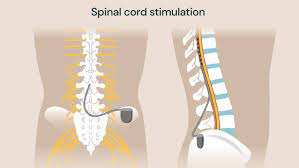
Spinal cord stimulation is a minimally invasive procedure that helps your nervous system “ignore” pain signals. A small device is implanted near the spinal cord to deliver mild electrical impulses, reducing pain signals.
Spinal Cord Stimulation Device Implantation
Step #1: Spinal Cord Stimulator Trial:
- A temporary test where thin wires are placed near your spinal cord (often in the epidural space) and connected to a small external device you wear. This device sends mild electrical pulses that can change how your brain perceives pain, often replacing it with a tingling sensation or just reducing the pain.
- Why is it done? To see if the spinal cord stimulation actually works for your pain before a permanent device is implanted. It’s like trying on a pair of shoes to make sure they fit.
Step #2: Spinal Cord Stimulator Implant:
- If the trial is successful, a small, permanent device (like a pacemaker) is surgically placed under your skin, usually in your buttock or abdomen, and connected to wires placed near your spinal cord. This device continuously sends those mild electrical pulses.
- Why is it done? For long-term management of chronic pain that hasn’t responded to other treatments. The device helps interrupt pain signals before they reach the brain.
Benefits:
- Precise pain relief
- Minimal downtime and recovery
- Can be combined with lifestyle strategies for lasting improvement
It’s ideal for:
Chronic post-surgical pain, Chronic back pain, and Neuropathic lower extremity pain
Read this article on Neuromodulation For Pain Relief
Section 5
Lifestyle Strategies That Support Recovery
Even the best medical interventions work better when paired with healthy habits. Managing chronic pain isn’t just about easing symptoms—it’s about supporting your body every day. Small, consistent choices in movement, nutrition, and sleep can reduce pain, boost energy, and help your body respond better to treatment.
Quick Tips for Daily Pain Support
- Take short, gentle walks every day to improve circulation and reduce stiffness.
- Include protein and healthy fats in every meal to support tissue repair.
- Practice deep breathing or meditation to lower stress, which can intensify pain.
💡Tip from Dr. Samer:
- Move safely: Low-impact activities like walking, cycling, or physical therapy exercises help reduce stiffness, strengthen muscles, and improve circulation. Focus on gradual progress, not pushing through pain.
- Eat to support your body: Choose nutrient-rich foods like fruits, vegetables, and Omega-3s to support joint and nerve health. Consider a Mediterranean-style diet and consult a nutritionist before making major changes.
- Prioritize sleep: Maintain a consistent sleep schedule and create a calm, comfortable environment to promote healing, resilience, and better pain management.
Section 6
Common Patient Questions
1. What conditions do you treat?
We treat spine-related pain, such as back pain, neck pain, and sciatica. We also address headaches, knee pain, fibromyalgia, and other chronic pain conditions. Our approach combines medications, physical therapy, and interventional procedures under fluoroscopy.
2. What are interventional procedures for pain?
These procedures involve using needles under X-ray guidance to target the source of pain. Techniques include injecting local anesthetics and steroids, denervating nerves with radiofrequency ablation, or stimulating the spinal cord with spinal stimulation.
3. What are the steps of treatment in your clinic?
After contacting us via the website or phone, we schedule an appointment with Dr. Samer or one of his team members. During the consultation, we thoroughly explain your condition and discuss the treatment plan. If an interventional procedure is recommended, Dr. Samer performs it in our state-of-the-art procedure room. We follow up in the days after the procedure to monitor your progress and plan the next steps.
4. How can I schedule a virtual visit?
If you’re unable to visit the clinic in person, you can consult us online. You’ll meet Dr. Samer virtually to discuss your issue, review medications and imaging, and plan treatment. To book an online consultation, click here.
5. How are you different from other clinics?
Dr. Samer is American Board-Certified in Pain Medicine with extensive experience treating patients in the USA. We recommend treatments based on scientific evidence of their efficacy and provide clear, realistic expectations regarding potential improvements.
6. What is Radiofrequency Ablation?
Radiofrequency ablation is a procedure where a needle with a heated tip (up to 80°C) is used to destroy nerves, thereby reducing pain. It’s primarily used for axial neck and low back pain originating from spinal joints. Nerves typically regenerate in 6–15 months, so the procedure may need to be repeated to maintain pain relief.
7. Are epidural steroid injections dangerous?
All procedures carry risks, but the most dangerous treatment is unnecessary treatment. When indicated and supported by evidence, epidural steroid injections are a recommended option. We perform these injections under X-ray guidance to ensure safety, and their risks are generally lower than those associated with spine surgery.
8. What is spinal cord stimulation therapy?
Spinal cord stimulation involves using a device to treat pain by stimulating the spinal cord’s posterior column, which transmits pain signals. A wire is placed under fluoroscopy in the spine, connected to an external device for a trial period. If successful, the device is implanted permanently under the skin. This therapy is used for low back and lower extremity pain after surgery, painful diabetic neuropathy, neuropathic extremity pain, and complex regional pain syndrome (CRPS). Dr. Samer has implanted hundreds of these stimulators in the USA, benefiting many patients.
Section 7
Glossary of Common Pain Terms
- Chronic Pain: Pain lasting longer than 3 months.
- Neuropathic Pain: Pain caused by nerve damage, often burning or tingling.
- Epidural: Area around the spinal nerves where injections may reduce pain.
- Radiofrequency Ablation (RFA): Procedure that disables small pain-transmitting nerves.
- Spinal Cord Stimulation (SCS): Device implanted in the spine to block pain signals to the brain.
- Root-Cause Pain Management: Treating the actual source of pain instead of only the symptoms.
- Neuromodulation: A treatment that uses mild electrical signals to change how nerves send pain messages to your brain.
- Facet Joints: The small joints in your spine that help you move and bend.
- Sciatica: Pain caused by pressure or irritation of the sciatic nerve, which runs from your lower back down your leg.
- Post-Surgical Pain: Ongoing pain after surgery, often due to nerve irritation or structural issues.
- Interventional Treatment: Minimally invasive procedures that target the source of pain directly.
Section 8
About
“My goal is to reduce my patients’ pain; so that they can be more active and able to do the things they like.”
– Dr. Samer Abdel-Aziz
Dr. Samer Abdel-Aziz is an American Board-Certified specialist in Anesthesiology and Pain Medicine. He trained and practiced for years in the USA as an interventional pain physician. Earlier in his career, he was a research fellow at Harvard Medical School, focusing on neuromodulation, and has multiple scientific publications in this field.
At his clinic in Amman, Dr. Samer offers advanced, evidence-based treatments for:
- Spine-related pain: back pain, neck pain, and sciatica
- Headaches and migraines
- Knee pain and joint issues
- Fibromyalgia and other chronic pain conditions
His approach is multimodal, combining medications, physical therapy, and interventional procedures under fluoroscopy to ensure precise, safe, and effective care.
What to Expect at Your Appointment
- Targeting the root cause of pain, not just symptoms
- Non-surgical, same-day treatments
- No opioids, minimal downtime, and no long hospital stays
Book Your Pain Assessment & Treatment Appointment in Amman, Jordan
- 🗓️ Book your first appointment here: Contact us
- 🗓️ Call us at +962790922204 or contact us via WhatsApp
Feel free to email your questions or concerns to info@samerpainclinic.com

