Acceptance and Commitment Therapy (ACT)

Nothing beats the joy of celebrating major or even minor life milestones with loved ones, whether it is watching your child graduate from kindergarten or university, celebrating a relative’s wedding, or cheering on a friend and their team. Chronic pain, however, can prevent some people from experiencing that joy. Some may live for years feeling trapped by their pain, resisting that pain only plunges them deeper into suffering. They may avoid activities they believe could worsen the pain, including social occasions, and may become increasingly frustrated over time.
Perhaps the real problem lies in trying to eliminate the pain rather than accepting it. Focusing on what is negative can amplify it rather than resolve it.
You can choose to live the life you want while experiencing pain from time to time, or you can stop living the life while waiting for pain to disappear. Chronic pain is a problem in itself, but our thoughts about it and the way we respond to it make a huge difference in how strongly it affects our lives. The suffering we experience – the sense that life has come to a standstill and that we cannot enjoy happy moments because of chronic pain – can be a product of our ongoing struggle with the pain and our attempts to deny or escape it.
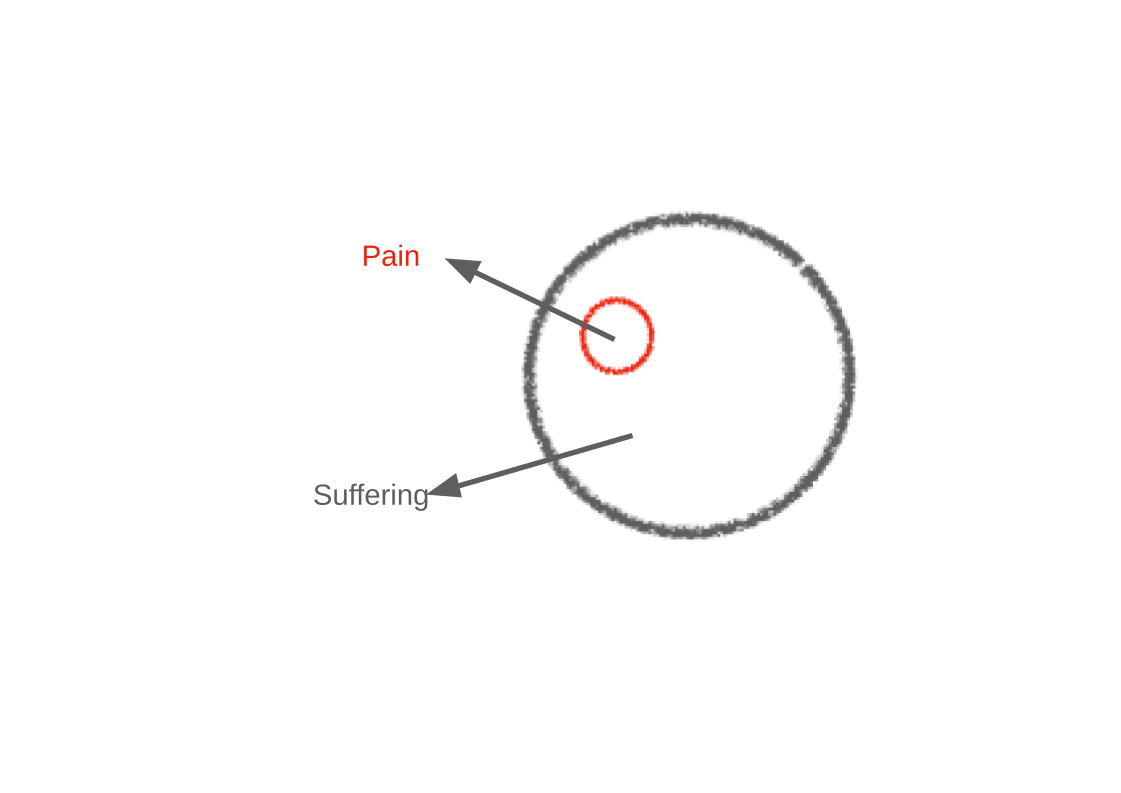
How Can We Live a Fulfilled Life Even With Pain?
Psychology offers several approaches that can help in this matter. Cognitive Behavioural Therapy (CBT), for example, aims to identify and modify negative thoughts. Another approach is Acceptance and Commitment Therapy (ACT), which aims to help you accept pain, change your relationship with negative thoughts about that pain, and live in accordance with your core personal values.
In this article, we will discuss Acceptance and Commitment Therapy (ACT), the principle behind it, and its six core processes.
What Is Acceptance and Commitment Therapy (ACT)?
Acceptance and Commitment Therapy (ACT) is a form of behavioural therapy that focuses on adapting to changes in both the external environment and one’s internal experience, while living in accordance with one’s core values. It consists of six core processes used to develop psychological flexibility.
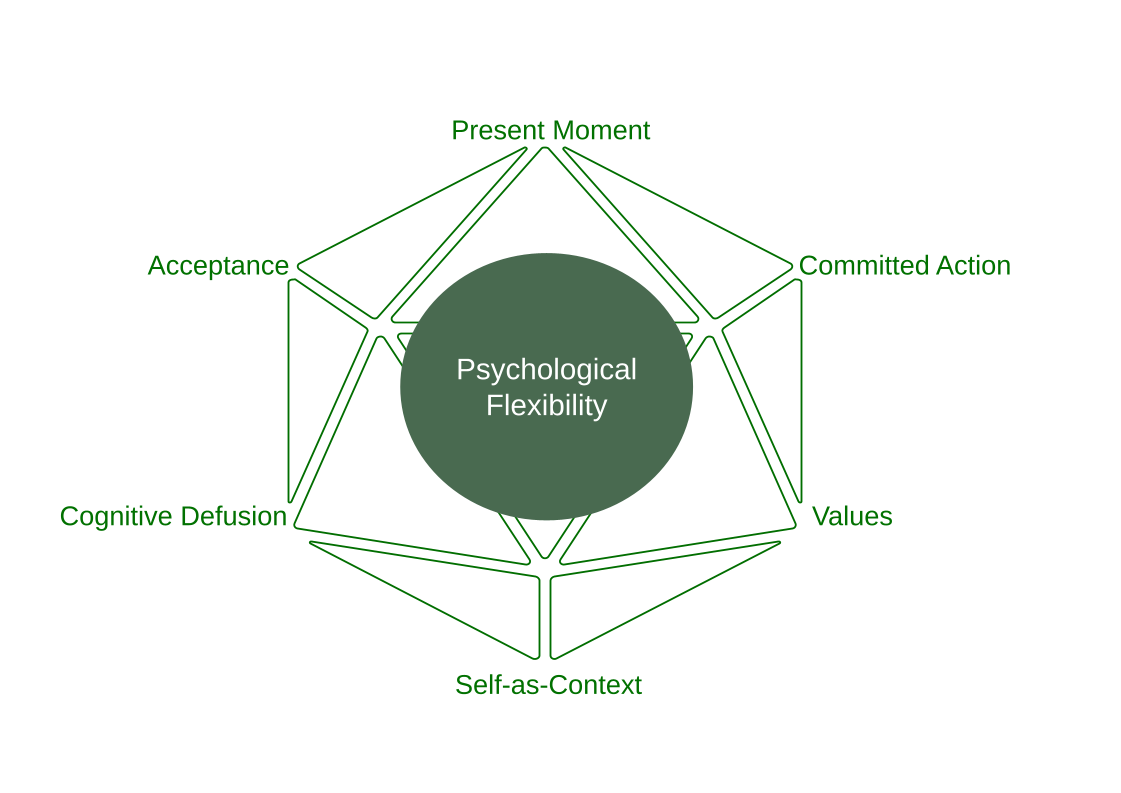
Psychological flexibility emphasizes the here and now. In other words, it means being present in the current moment without becoming consumed by fear or anxiety about the past or the future, and acting in accordance with one’s core values.
What Are the Core Processes of Acceptance and Commitment Therapy (ACT)?
Acceptance
Rather than rejecting or fighting the experience of pain, acceptance involves allowing physical pain and the thoughts associated with it to be present without attempting to suppress the sensation or change those thoughts.
Cognitive Defusion
Cognitive defusion means relating to your thoughts as experiences that are separate from you. You recognize that thought is present without becoming fused with it. For example, you may have the thought, “Fibromyalgia prevents me from living my life.” In that moment, you may experience the thought as an absolute truth rather than simply as a thought that could be inaccurate. Cognitive defusion encourages you to say aloud, “I notice that I am having the thought that fibromyalgia prevents me from living my life.” Repeating the thought in this way can help you experience it simply as just words.
Self-as-Context / The Observing Self
People often identify themselves with their thoughts. In reality, your thoughts do not define who you truly are. They may form part of your experience, but they are not you. Self-as-context, or the observing self, helps you notice your thoughts as experiences that are separate from you. They are not you; you are simply observing them from a distance. You remain yourself even as your thoughts change, rather than allowing those thoughts to define you.
Values
Values are the guiding principles and ideals that shape a person’s actions and preferences in life, such as integrity, compassion, contentment, commitment, and others.
Committed Action
Committed action means taking the actions and practical steps that help you live in accordance with your values.
Mindfulness / Present-Moment Awareness
Mindfulness, or present-moment awareness, means focusing on the moment you are living in without becoming lost in thoughts about the past or the future – living with a “here and now” mindset.
Acceptance and Commitment Therapy helps us continue living even when pain is present, so that pain does not become a barrier between us and the happy memories we create with the people we love. ACT can help you be present at the occasions you want to share, participate in the activities you enjoy, and live your life in the way that you love. This therapy may not eliminate the pain, but it can help you reclaim the life you once thought pain had taken away.
At Dr. Samer Abdulaziz Clinic, we adopt a multimodal approach. We consider both physical and psychological factors, because we believe these factors influence each other. You can contact us to know more about the approaches available at the clinic.
